Summer 2025
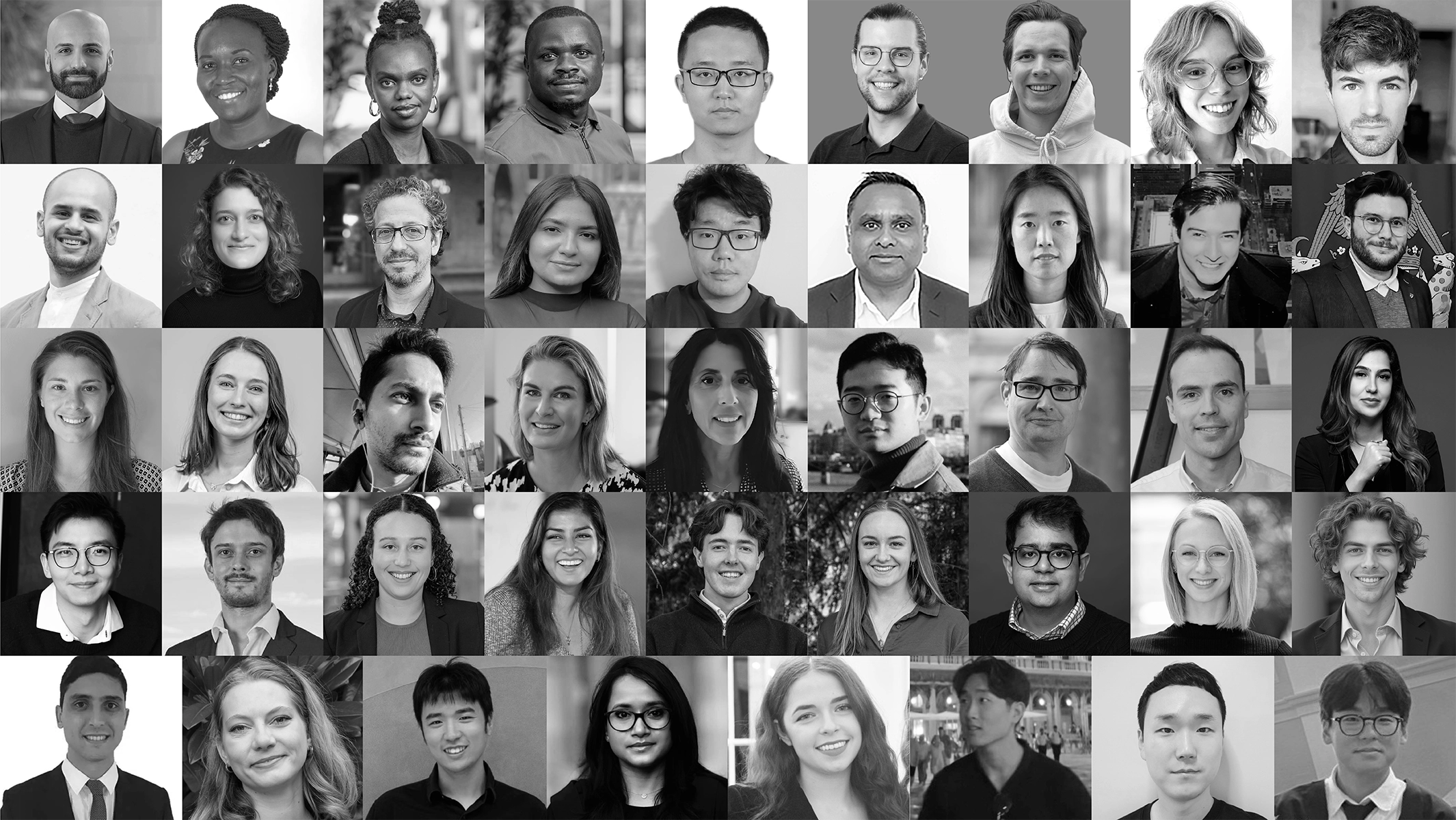
The inaugural cohort. 23 ventures. 17 departments. One summer at King's College Cambridge.
Highlights
SPARK is a four-week residential incubator designed to help students, researchers and recent alumni transform early ideas into validated, investable ventures. The first SPARK cohort took place in summer 2025, bringing together innovators from across the University of Cambridge to develop prototypes, strengthen business models and build momentum toward early-stage funding.
Originally created by King's Entrepreneurship Lab in partnership with Founders at the University of Cambridge, the 2025 programme provided participants with expert mentoring, specialist workshops and access to entrepreneurial communities across both organisations.
23
Ventures built
17
Cambridge departments represented
£50M+
Raised by the Founders portfolio
240+
Expert community members
Programme Structure
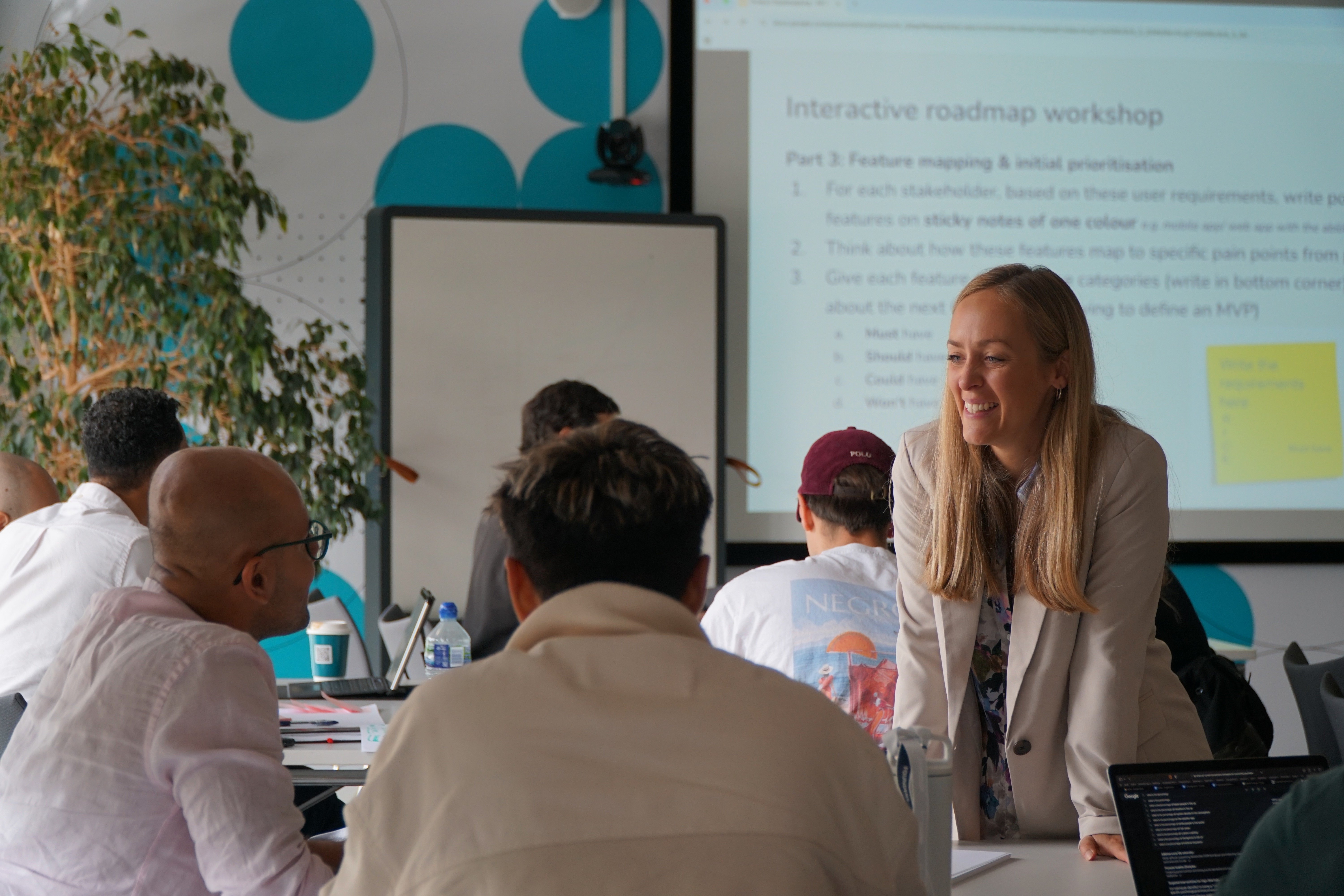
SPARK 1.0 welcomed co-founding teams and individual founders from across the University of Cambridge to materialise their ideas into action in just four weeks. The programme, designed for undergraduates graduating in 2025, postgraduates, researchers and recent alumni, guided participants through a structured process of validation, prototype development and business modelling. By the end, founders had a clearer pathway to product development, a stronger understanding of their team dynamics and a route towards seed-stage funding and scaling their impact.
Drawing on the combined venture-building expertise of King's Entrepreneurship Lab and Founders at the University of Cambridge, SPARK 1.0 connected participants with experienced mentors and entrepreneurial communities. King's E-Lab has supported ventures such as Nemesis, PoliValve, Asan and ViraHealth, as well as Echion Technologies, RoboK and WaterScope. Founders at the University of Cambridge has accelerated high-tech companies including Nanomation, Xterna and Molyon – ventures that together have raised over £50 million.
The programme began with deep market discovery, competitor mapping and early idea validation. Working closely with matched mentors, participants emerged from week one with a validated business idea, an understanding of product-market fit and a concise 2-minute elevator pitch to guide the weeks ahead.
In week two, founders moved from concept to creation, developing prototypes and early MVPs while gaining an understanding of the tech-stack and tools available to support their venture. Expert sessions explored product development approaches and common pitfalls faced by early-stage teams.
Week three brought the key question: What is the best business model for your idea? Teams learned how to experiment with pricing strategies, customer acquisition pathways and commercial positioning. They emerged with a stronger understanding of brand, marketing and how to keep their venture sustainable – socially, environmentally and economically.
The final week prepared participants for early-stage investment, introducing the different types of financing available and what investors look for at this stage. Teams refined their pitch materials, deepened their understanding of funding pathways and presented at Demo Day to an audience of investors and ecosystem partners, with the opportunity to win £20,000 investment.
What was included
Four-week full-time residential programme.
No programme fee for current students and alumni up to 2 years graduated.
A dedicated mentor for each team.
Masterclasses with global commercialisation experts, entrepreneurs and investors.
Free working space during the programme.
Curated access to more than 240+ experts in the Founders at the University of Cambridge Community.
Curated access to global experts from the King's E-Lab network.
The chance to pitch for £20,000 investment (subject to eligibility).
The opportunity to engage investors at Demo Day.
Social events organised throughout the duration of the programme.
Two formal dinners at King's College with expert community members from the Founders and King's E-Lab networks.
"Entrepreneurship can be about producing social good"
Gabriel Brown — King's College alumnus & winner of the King's College Entrepreneurship Prize 2024
SPARK 1.0
19 FEB '25
APPLICATIONS OPEN
21 MAR '25
APPLICATIONS CLOSE
APR '25
INTERVIEWS
26 AUG '25
PROGRAMME KICK-OFF
5 SEP '25
COMMUNITY DINNER
18 SEP '25
DEMO DAY
19 SEP '25
PROGRAMME FINALE
Aizen is a credit data startup driving financial inclusion with AI-powered financial passports that enable fairer credit decisions using real-time income, rent and spending data.
FOUNDER:
AshGold Africa reduces education inequality by expanding energy access. In Kenya, it deploys solar projects and digital tools to schools, creating green jobs and climate-resilient learning environments.
CO-FOUNDERS:
Atera Analytics integrates AI, energy and network planning to optimise EV energy infrastructure and logistics for smarter, scalable deployment across the UK, Europe and USA.
FOUNDER:
Borderline is creating the data backbone for emerging market investment opportunities – converting fragmented project pipelines into structured, diligence-ready opportunities for capital allocators.
CO-FOUNDERS:
Cambridge Mobilytics turns EV charging data into actionable intelligence, building predictive AI models and real-time analytics to support smarter decisions across the e-mobility sector.
FOUNDER:
Dielectrix develops advanced materials for next-gen semiconductors, enabling energy-efficient, scalable devices and supporting architectures like CFET to meet growing demand for AI and deep learning.
CO-FOUNDERS:
Egg Advisor is a digital platform guiding women through the egg freezing journey with evidence-based insights, personalised tools and one-to-one support for informed fertility choices.
CO-FOUNDERS:
Greenharvest is tackling the food sustainability crisis by using climate modelling, soil analysis and satellite data to predict crop potential and guide resilient agricultural planning.
CO-FOUNDERS:
Heartly helps individuals prevent cardiovascular disease through personalised education, data-driven insights and coaching – bridging the gap between public resources and private care with accessible, expert-led support.
FOUNDER:
HED is redefining how patient experience is measured in personalised health tech. Temporal Experience Tracing™ captures real-time changes in how patients feel, offering insights into treatment impact and enabling responsive, human-centred care.
CO-FOUNDERS:
iFlame accelerates product innovation with a multi-agent AI system that combines automated collaboration and human input to deliver data-driven, scalable and creative product strategies.
Healthtech startup IntolerSense uses AI-enhanced food logging and symptom tracking to uncover hidden intolerances, giving users and clinicians faster, more accurate insights into dietary triggers.
CO-FOUNDERS:
Med Arcade simplifies clinical data with a user-first agentic AI platform that streamlines patient records, reduces cognitive load and frees up time for better care.
CO-FOUNDERS:
MENRVA is an AI SaaS platform streamlining art discovery for businesses, matching them with the exact artists and artworks through personalised recommendations and direct connection tools.
CO-FOUNDERS:
Myta Bio creates biomimetic industrial chemicals from natural ingredients, starting with Myty™ – a mussel-inspired adhesive offering a safer, sustainable alternative to petrochemical-based glues.
CO-FOUNDERS:
Neela Biotech produces carbon-negative jet fuel using microbial upcycling and biogas infrastructure, offering a scalable, low-cost path to decarbonise aviation through sustainable fuel innovation.
CO-FOUNDERS:
Polytecks is developing a novel method for measuring body surface potentials using wearable e-textiles to improve heart disease detection – starting with early screening for valvular disease in dogs.
CO-FOUNDERS:
PsyPress (formerly Dulce Cerebrum) is pioneering glycosylation analysis – cracking the "sugar code" – to detect early psychosis through powerful AI models and everyday speech for personalised mental health diagnostics.
CO-FOUNDERS:
RetroAnalytica uses AI and climate modelling to predict heat loss, assess retrofit potential and optimise energy efficiency across buildings and property portfolios for decarbonisation.
CO-FOUNDERS:
SafeTide is developing low-cost stabilisation technology that keeps delicate medicines like insulin stable at room temperature, reducing waste and improving access to life-saving treatments.
FOUNDER:
The Surpluss is a B Corp climate tech platform helping businesses trade excess resources, reducing waste and unlocking circular value across global supply chains.
FOUNDER:
Yacson QuantumBio analyses plant-based therapeutics to personalise IBD care, using organoid models and epigenetic biomarkers to guide treatment selection and reduce reliance on animal testing in drug discovery.
CO-FOUNDERS:
Zenithon AI accelerates fusion research with machine learning tools that reduce plasma simulation times from months to seconds – enabling faster, smarter design across energy and engineering sectors.
FOUNDER:
Applications Open
Applications are open for SPARK 2.0. Submit your application by 31 March 2026.
Apply Now